


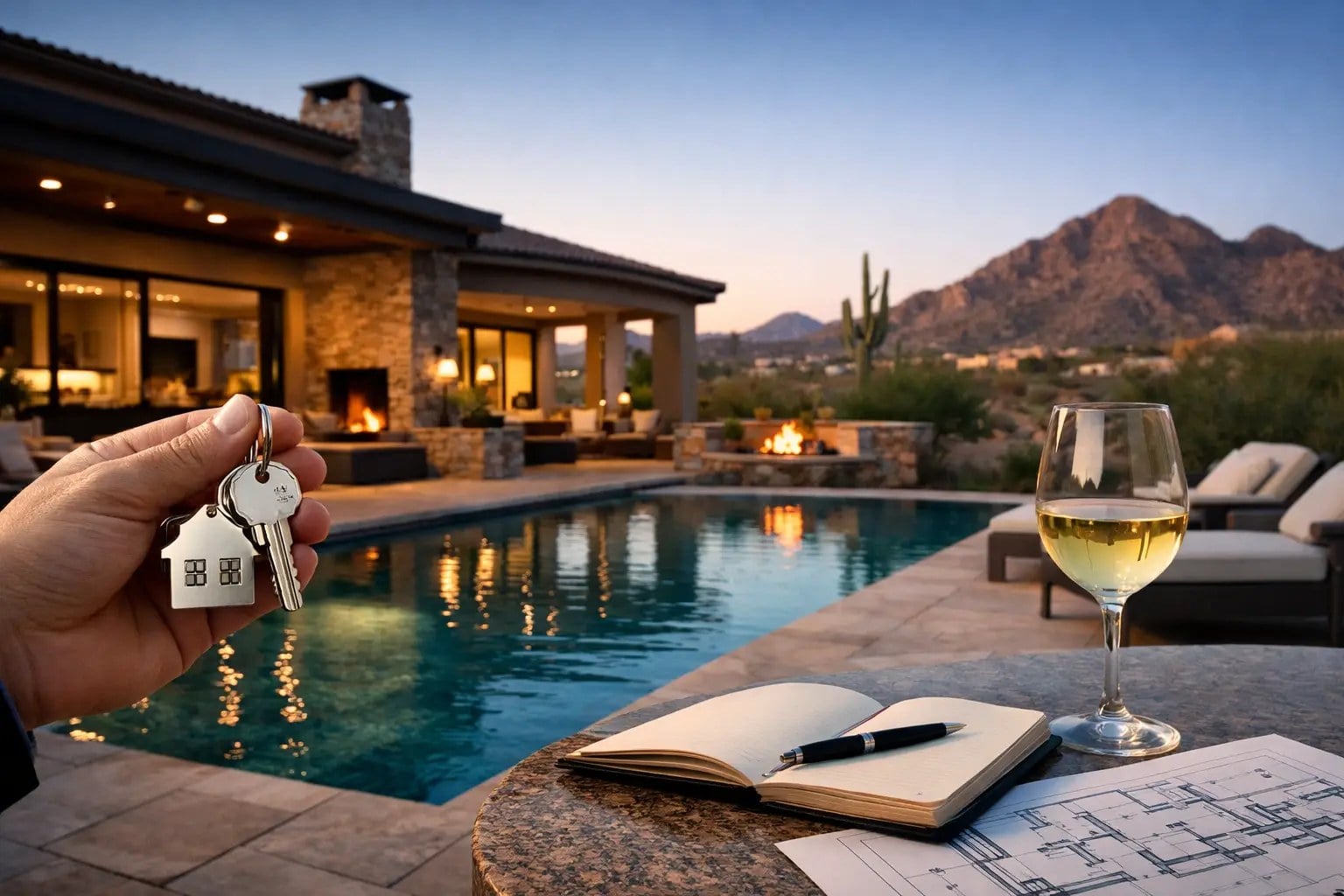
A luxury home in Scottsdale can look exceptional in listing photos and still be the wrong fit once you account for drive time, lot exposure, community rules, and ongoing ownership costs. Scottsdale luxury homes span a wide range of settings, from golf communities and guarded enclaves to hillside properties with city-light views and newer desert-contemporary homes. The right comparison starts with more than square footage and a price tag.
For buyers, the goal is to identify the property that best supports how you plan to live, not simply the one with the longest amenity list. For sellers, understanding what buyers compare helps position a home accurately against active competition. Current MLS data, neighborhood activity, and recent closed sales provide a much better starting point than broad luxury-market averages.
Location Changes the Value of Scottsdale Luxury Homes
Scottsdale is not a single luxury market. A home in North Scottsdale, Silverleaf, DC Ranch, Troon, Desert Mountain, McDowell Mountain Ranch, or Old Town can appeal to very different buyers. Price per square foot may provide a useful reference point, but it cannot fully account for a home’s setting, access, view corridor, or community reputation.
Start by considering the location beyond the neighborhood name. Ask how close the property is to golf, dining, trail access, medical care, shopping, and the airport. A buyer relocating from outside Arizona may prioritize quick access to central Scottsdale or Phoenix Sky Harbor. A local buyer may place more value on a quiet street, a larger lot, and distance from through traffic.
Desert views also need a closer look. Mountain views, city lights, golf frontage, and open-space adjacency can meaningfully affect demand. However, not all views are equally protected. Review surrounding parcels, planned development, and the home’s position within the community before treating a view as permanent.
Match the neighborhood to the ownership plan
A second home, a primary residence, and an investment property can have very different location requirements. A lock-and-leave buyer may value a gated community with exterior maintenance included. A household planning to entertain often may want a larger outdoor living area, guest accommodations, and easy access for visitors.
If rental income is part of the plan, confirm the community’s short-term and long-term rental rules before writing an offer. Scottsdale regulations and HOA policies can change the financial picture quickly. Do not assume that a property marketed as an investment opportunity has unrestricted rental potential.
Look Past the Finish Level
Luxury homes often feature premium appliances, stone surfaces, resort-style pools, wine storage, smart-home systems, and detailed architectural work. Those features matter, but buyers should separate visual appeal from condition, usability, and replacement cost.
A kitchen may be beautifully designed but poorly arranged for regular cooking. A large pool can be a major selling feature, yet older equipment, heaters, pumps, automation systems, and surface finishes can create significant near-term expenses. Outdoor kitchens, fire features, misting systems, water features, and landscape lighting also require inspection and maintenance planning.
In the Arizona climate, the home’s building systems deserve close attention. Roof condition, HVAC age and capacity, insulation, window performance, drainage, and sun exposure are practical value factors. A west-facing wall of glass may create a striking room, but it can also affect comfort and cooling costs during summer afternoons.
For hillside or custom homes, take time to understand site-specific considerations. Grading, retaining walls, private roads, drainage routes, and wildfire-risk mitigation may not be visible in a standard walkthrough. A thorough inspection process is especially valuable when a home has extensive outdoor improvements or a unique lot configuration.
Compare Lots, Not Just Homes
Two similar homes in the same community can perform very differently because of their lots. Lot size is one measure, but usable outdoor space is often more important. A larger parcel with steep terrain, heavy road noise, or limited privacy may not offer the same day-to-day value as a smaller, well-positioned lot.
Walk the property at different times if possible. Morning light, late-afternoon sun, noise patterns, and privacy can change throughout the day. Look at the relationship between the main house, pool, patios, guest spaces, and neighboring properties. In Arizona, outdoor living is a major part of the purchase decision, so the backyard should function as an extension of the home rather than a feature viewed only from indoors.
Golf-course homes require an additional layer of evaluation. Fairway frontage can be highly desirable, but buyers should consider golfer traffic, privacy, landscaping buffers, and the possibility of stray balls. Homes near community gates or major roads may offer convenient access while trading away some quiet and privacy.
Understand HOA Costs and Community Restrictions
Luxury communities frequently offer valuable amenities, security, landscaping standards, and social or golf options. They also come with fees, design rules, and approval processes that should be reviewed early.
Request the HOA documents and read them carefully. Confirm the current assessment, whether special assessments are being discussed, and what the fee covers. Some communities include gate service, common-area maintenance, or landscaping. Others have separate club memberships, transfer fees, or capital contributions that can materially increase the cost of ownership.
Architectural rules deserve attention even after the purchase. If you plan to add a guest casita, revise a backyard, install solar, change exterior colors, or expand an outdoor kitchen, find out what approvals are required. A community’s standards can protect long-term property values, but they may also limit how quickly you can make changes.
Use Comparable Sales the Right Way
Luxury pricing is often more subjective than pricing in a tract-home neighborhood. There may be fewer similar closed sales, and a one-of-a-kind lot or custom design can make direct comparisons difficult. That does not mean buyers should skip the comparable-sales analysis. It means the analysis needs more context.
Review active listings, pending listings when available, and recent closed sales. Active properties show the current competition, while closed sales show what buyers have actually paid. Look for differences in location, lot orientation, view quality, renovation level, guest quarters, garage capacity, and community amenities.
Days on market can also be useful, but it should not be interpreted in isolation. A home that has been available for several months may be overpriced, or it may simply be highly specialized. Likewise, a quick sale may reflect unusually strong demand, a strategic list price, or a property that checked several hard-to-find boxes.
A buyer should avoid making an offer based only on a percentage below list price. The better question is whether the price is supported by the home’s specific strengths and the available alternatives. Sellers benefit from the same discipline. Overpricing a luxury home can limit early attention, while a well-supported price gives qualified buyers a reason to act.
Prepare for a More Detailed Purchase Process
Luxury purchases can involve cash, jumbo financing, asset-based lending, trust ownership, or the sale of another property. Have the financial structure organized before the right home appears. Proof of funds or a strong preapproval is often expected, particularly when competing for a well-located property.
The due-diligence period should be equally organized. In addition to a general inspection, buyers may need specialists for pools, roofs, HVAC systems, sewer lines, fireplaces, solar equipment, landscaping, or structural features. The appropriate scope depends on the property. A newer home in a managed community has different risks than an older custom home on a large desert lot.
Timing matters because quality inventory can move quickly, especially when a home combines a desirable community, strong views, updated finishes, and a functional floor plan. Set up a focused search with your price range, preferred areas, property type, minimum garage space, lot size, and key amenities. Alerts for new listings and price changes help you evaluate opportunities while they are still current.
The best Scottsdale luxury home is rarely the one with the most upgrades on paper. It is the property where location, lot, condition, ownership costs, and your plans for the next several years all line up. When a home checks those practical boxes, move forward with clear data and a thorough review rather than waiting for a perfect property that may never come to market.