


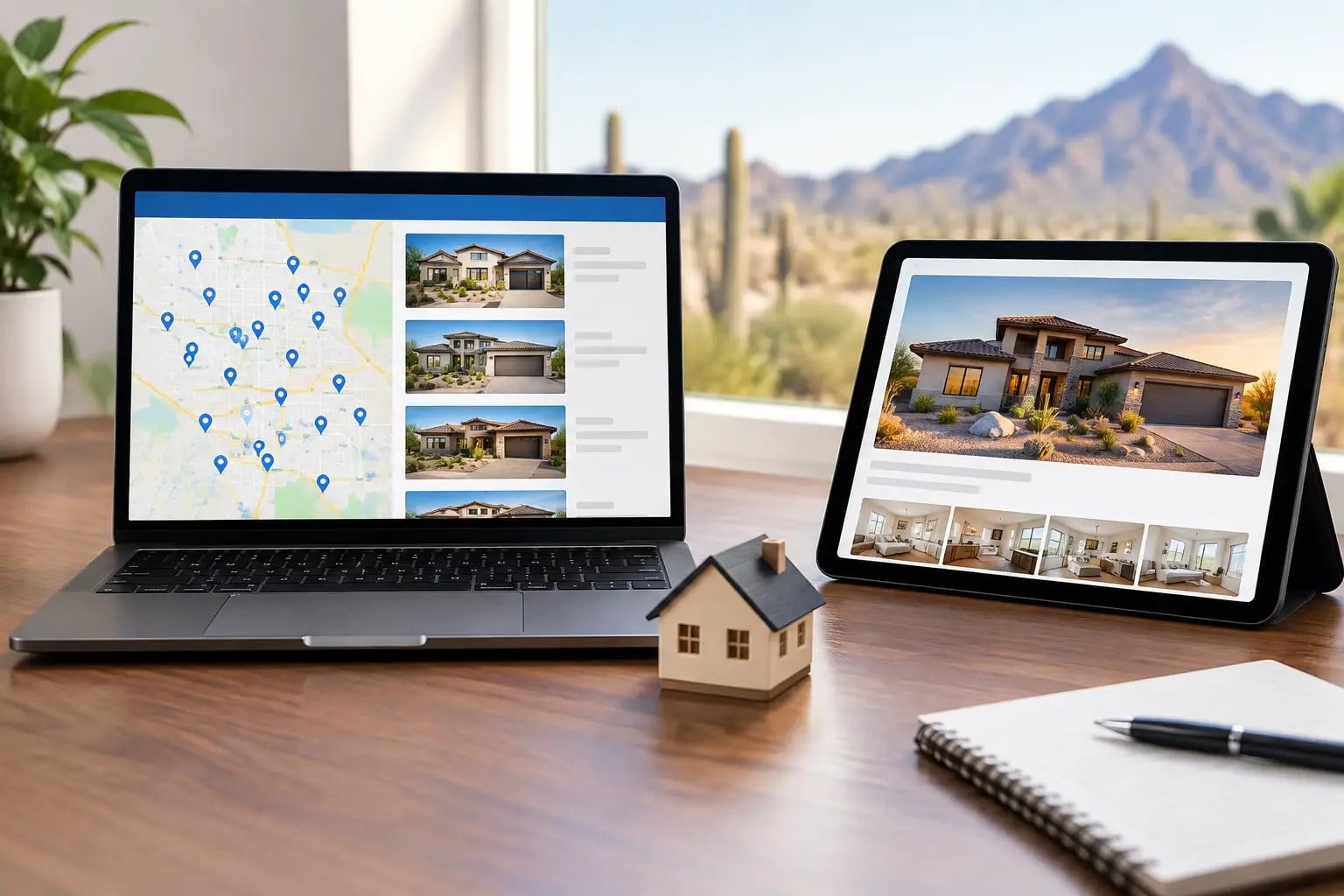
A home can go pending before a buyer sees it on a favorite portal. A price reduction can change the value of a showing request. And a listing marked active may have details that matter far more than the headline price: financing limitations, age restrictions, solar terms, HOA rules, or a seller deadline.
That is why the choice between Arizona MLS versus real estate portals is more than a question of where to browse homes. It affects how quickly you see changes, how much context you have when comparing properties, and how confidently you can act when the right home appears.
For most buyers, the best approach is not choosing one source forever. It is understanding what each source does well, where its information can fall short, and when to move from online research to a conversation with a local agent.
What the Arizona MLS Actually Is
The Multiple Listing Service, or MLS, is the professional database where participating real estate agents and brokers enter, update, and share listing information. In Arizona, this is the working source for property status, list price, showing instructions, property details, disclosures, commission information, and agent-to-agent notes.
Consumers do not typically log directly into the agent version of the MLS. Instead, they may use an MLS-connected home search that displays approved public-facing listing information from the Realtor database. That distinction matters. An MLS-connected search is designed to provide current listing data to buyers and sellers without exposing private details meant only for licensed professionals.
The MLS is not automatically better because it is more technical. Its value is that listing agents are responsible for entering and maintaining the data used by other agents to market and sell the property. When a home changes from active to pending, returns to market, or receives a price adjustment, the MLS is generally where that change begins.
What Real Estate Portals Do Well
Real estate portals are consumer websites and apps built for browsing. They often make early-stage searching easy with saved favorites, commute estimates, neighborhood content, estimated home values, and broad search filters. For someone considering a move from another state or casually exploring homes in Scottsdale, Surprise, or Peoria, that convenience has real value.
Portals may also show listings from MLS data feeds, broker feeds, public records, homeowners, or advertising partners. The exact source and refresh schedule vary by portal, market, and listing. Some listings can be very current. Others may be delayed, incomplete, duplicated, or still visible after the property is no longer available.
That does not make portals unreliable across the board. It means they are best viewed as a useful discovery tool, not the final word on availability or property terms. If a home looks promising, confirm its status before arranging your schedule around it.
Arizona MLS Versus Real Estate Portals: The Practical Differences
The biggest difference is not the website design. It is the path the information takes before it reaches you.
Listing status and freshness
MLS data is usually updated by the listing side of the transaction, then distributed to approved consumer-facing searches and other destinations. A direct MLS-connected search can therefore be a strong choice for buyers who want to monitor active inventory, price changes, and status updates closely.
A portal may receive the same information after it passes through a feed and its own publishing process. In a fast-moving segment, even a short delay can create frustration. This is especially relevant for well-priced entry-level homes, townhomes, active-adult properties, and homes in high-demand West Valley neighborhoods.
Arizona Real Estate and Homes refreshes its MLS-sourced listings every 15 minutes. For buyers who want to self-search without relying on stale information, that frequency can help reduce the gap between a market change and a saved-search alert.
Property details and listing context
A portal can provide an attractive summary, but the details may be condensed or standardized for a national audience. MLS-connected property pages are often better positioned to show fields that are especially useful in an Arizona search, such as community features, HOA information, lot size, pool details, school information, architectural style, and property type.
Still, no public listing page tells the whole story. A buyer considering a home with leased solar, a private well, a septic system, or a community with rental restrictions needs more than a quick listing description. The right next step is confirming the details through available documents, disclosures, HOA materials, inspections, and professional guidance.
Search control
Portals are often excellent for broad browsing. But a quality MLS-connected search can be more effective when your criteria are specific. You may need to search within a custom map boundary, isolate homes with a pool and RV gate, compare condos against townhomes, exclude age-restricted communities, or track vacant land separately from residential homes.
This is where map-based search and saved criteria become practical rather than decorative. A buyer relocating to Phoenix may begin with a large area, then narrow the search after comparing commute patterns, inventory, taxes, home styles, and community amenities.
Lead routing and support
Many portals are built around connecting consumers with agents, sometimes based on advertising arrangements. The agent who responds may be helpful, but may not necessarily be the local expert you expected or the agent associated with the listing.
An MLS-connected local search platform can offer a more direct path to informed assistance. You can research independently, save properties, and ask targeted questions when you are ready. That keeps control with the buyer while making professional support available at the point it becomes valuable.
When a Portal Is Enough and When It Is Not
A portal is usually enough when you are getting a feel for Arizona pricing, comparing areas, or building an early wish list. It can help you identify whether your budget better fits a condo in Glendale, a newer home in Buckeye, or a larger resale property farther northwest.
It becomes less sufficient when timing and precision matter. If you plan to buy in the next few months, are watching a narrow price range, need a particular school area, or are competing for homes with limited inventory, use an MLS-connected search and alerts. Confirm availability before you tour, write an offer, or assume a price change reflects the current terms.
Sellers should also be careful about relying only on portal estimates. Automated valuations can be a convenient starting point, but they cannot fully account for upgrades, condition, a premium lot, nearby active competition, or buyer demand within a specific subdivision. An accurate pricing conversation starts with recent local sales and current competing listings, not a single online estimate.
A Better Search Routine for Arizona Buyers
Start broad enough to learn the market, then tighten your criteria as you see what is available. Set alerts for new listings, price changes, and properties that return to the market. Review status changes instead of assuming a saved favorite is still available.
When a property rises to the top of your list, look beyond bedrooms, bathrooms, and square footage. Ask how long it has been available, whether the price has changed, what the HOA covers, whether there are solar or lease obligations, and what similar homes have sold for nearby. For condos and townhomes, evaluate monthly fees and community rules early. For homes on the edge of metro areas, verify utilities, road access, and any well or septic considerations.
Most importantly, make sure your financing and showing plan are ready before the right listing appears. Fresh data is helpful only when you can act on it.
The Best Source Depends on Your Next Decision
Arizona MLS-connected searches and real estate portals both have a place in the buying and selling process. Portals are useful for discovery, inspiration, and broad market research. MLS-connected searches are better suited to buyers and sellers who need timely status updates, detailed search controls, and a clearer view of active market conditions.
Use the tools that give you more clarity, not more noise. Then, when a property or valuation could affect a real decision, verify the details and get direct guidance before the opportunity changes.